
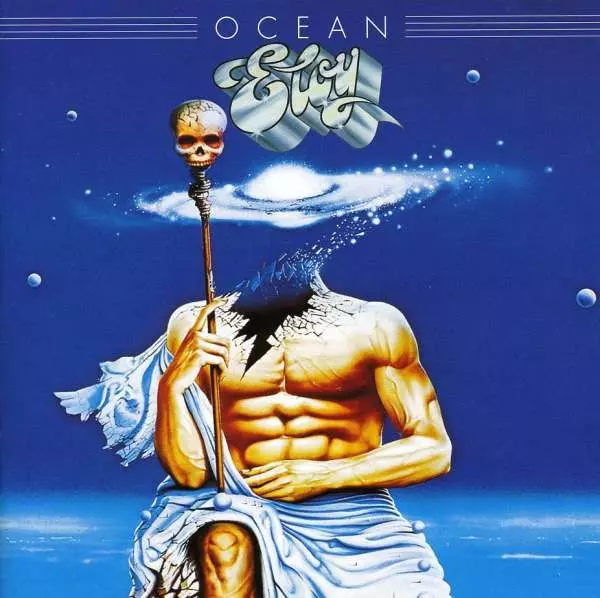
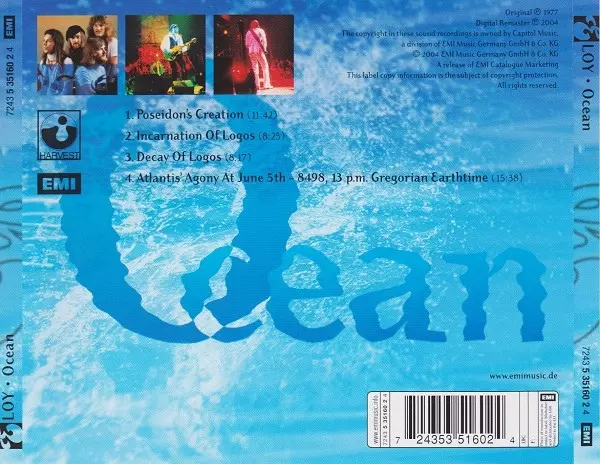


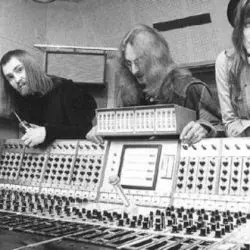


Eloy's sixth studio album, Ocean, follows Plato's Atlantis from its creation and rise to its destruction, drawing parallels with the dangers facing humanity during the Cold War. Jürgen Rosenthal wrote the concept and lyrics. The line-up brought together vocalist and guitarist Frank Bornemann, bassist and vocalist Klaus-Peter Matziol, keyboardist Detlev Schmidtchen and drummer and percussionist Rosenthal. Eloy composed, arranged and produced the album, with Bornemann also credited as producer. It was made at Sound-N-Studio in Cologne in September and October 1977 with recording engineer Georgi Nedeltschev and released on 26 October 1977. Unable to find a rehearsal studio in Hanover, the band used a converted Second World War shelter, whose atmosphere inspired heavier, darker music than before.
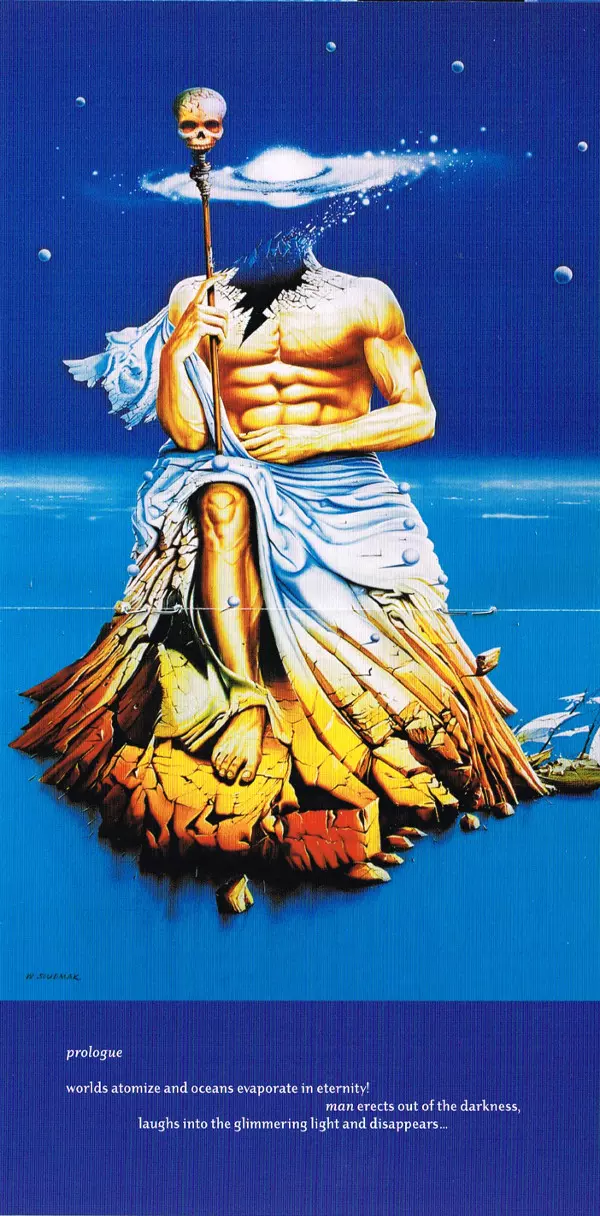
The narrative links violence, oppression and greed to divine destruction, while leaving room for renewal if humanity becomes wiser. Rosenthal wrote the lyrics in isolation and handed them to Bornemann minutes before the final day's vocal session; his first take made the record. Bornemann later felt the compositions were not fully developed and preferred the live versions on Reincarnation on Stage. The cover draws on the painting The Tempest, named after Shakespeare's play. Widely regarded by critics and fans as Eloy's finest work, Ocean remains their most commercially successful album. Its sequel, Ocean 2: The Answer, followed in 1998.
Album valt binnen het genre Progressive rock, Space Rock en Symphonic Prog.